
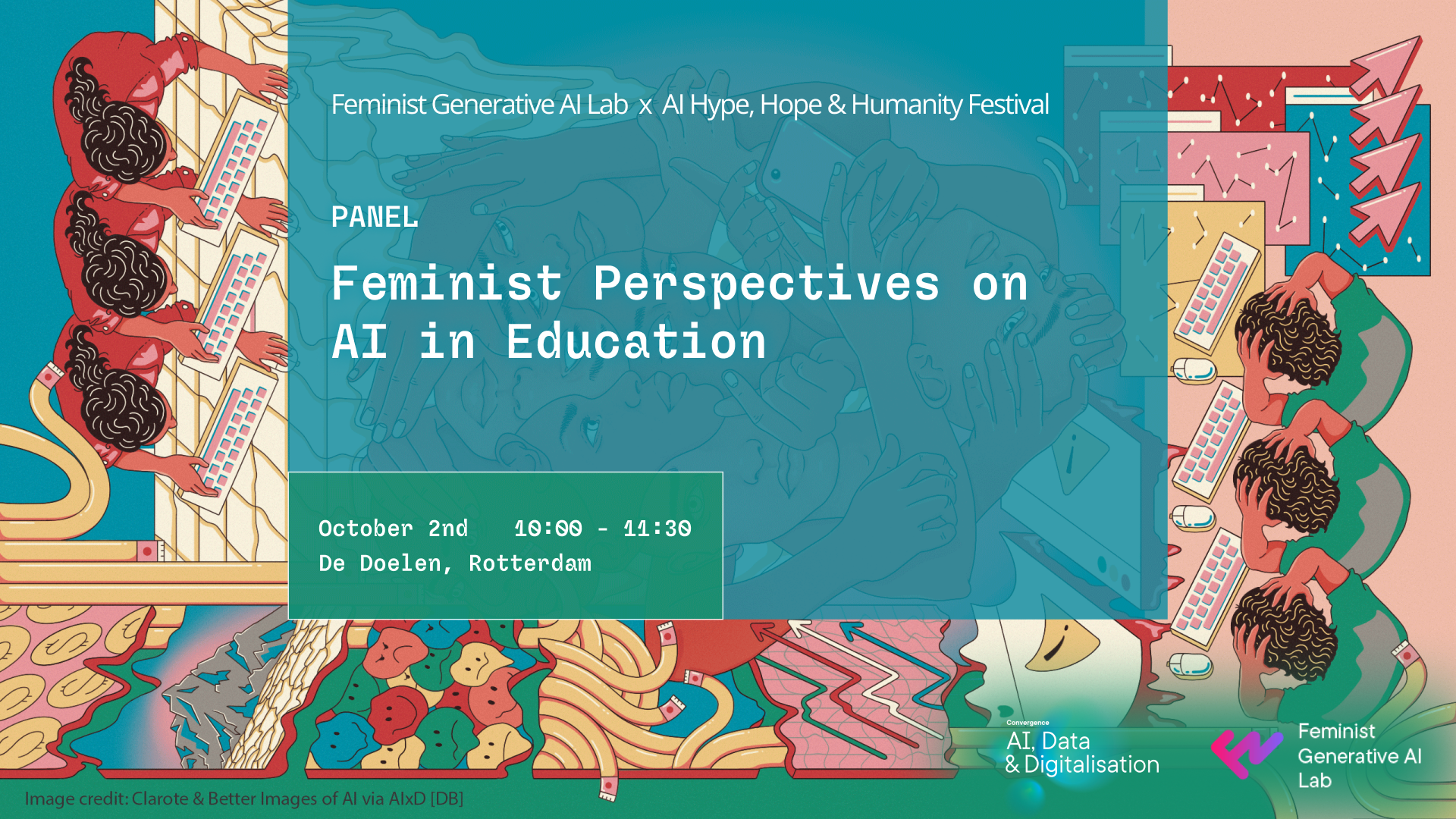
In this panel, we invite speakers and attendees to explore how feminist and critical pedagogies can inform current discussions on AI and education. Together, we'll discuss how AI is reshaping knowledge, learning, and assessment, and how feminist and critical pedagogies can help reimagine education.
The idea that AI is inevitable has come to permeate much of society, including spaces of work and higher education. Generative AI in particular is promoted as a tool that will reduce educators' workload and increase well-being. AI is often framed as both a threat when (over)used by students, and a companion for researchers and educators. Yet research suggests it can increase rather than reduce workloads, and raises concerns around deskilling, ecological and social harms, and the broader well-being of educators and students.
It is clear that AI is shaking up higher education, creating a need to discuss what counts as knowledge, ownership of knowledge and infrastructures, and how we think about and reward academic performance.
This panel brings together interdisciplinary academic expertise around these and other questions, with a focus on higher education:
How can educators respond to AI hype and fears?
Does current AI usage align with other goals and promises educational institutions aim to deliver, such as sustainability and fairness?
Which ideas in educational research and critical and creative practice can help to envision just futures for AI in education?
2nd October | 10:00-11:30
Panel on Feminist Perspectives on AI in Education
Keynote + Panel Discussion
Organizers: Feminist Generative AI Lab with AI Hype, Hope and Humanity Festival
Guests: Maha Bali (keynote), Kim van Broekhoven (panelist), Sonia de Jager (panelist), and Johannes Schleiss (panelist)
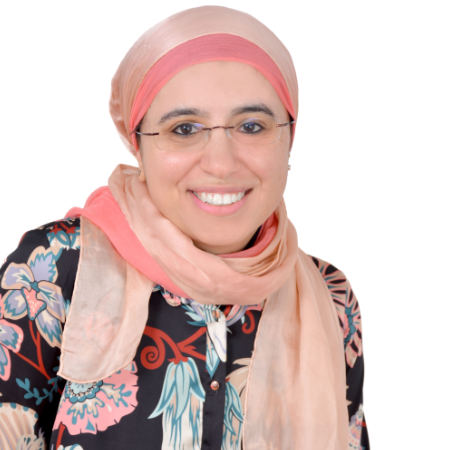
Maha Bali
American University in Cairo
Keynote & Panelist
'Centering Social Justice, Compassion, and Human Agency in Critical AI Literacy’
In this interactive keynote, we will question AI inevitability narratives, and instead imagine together how we might use frameworks for social justice and compassion to help us center human agency in our learning environments and in the ways we teach and learn critical AI literacy. We will start with playful approaches such as metaphors and cake analogy, as possible classroom activities to promote dialogue with learners about AI. We will then consider how to look at injustices in AI through the lens of the 4 I’s of Oppression. We will also discuss how to approach AI in the classroom applying the model of critical compassionate learning design that is partially inspired by Indigenous scholar Nan Wehipeihana. Can we possibly approach AI with a metarelational approach that challenges and dismantles current capitalist, colonialist discourses and ideologies behind big tech?
20 minutes with 2-3 interactive moments
Maha Bali is Professor of Practice at the Center for Learning and Teaching at the American University in Cairo. She has a PhD in Education from the University of Sheffield, UK. She is co-founder of virtuallyconnecting.org (a grassroots movement that challenges academic gatekeeping at conferences) and co-facilitator of Equity Unbound (an equity-focused, open, connected intercultural learning curriculum, which has also branched into academic community activities Continuity with Care, Socially Just Academia, a collaboration with OneHE: Community-building Resources and MYFest, an innovative 3-month professional learning journey. She writes and speaks frequently about social justice, critical pedagogy, and open and online education. She blogs regularly at https://blog.mahabali.me and tweets @bali_maha.

Dr. Kim van Broekhoven
Erasmus University Rotterdam
Panelist
Dr. Kim van Broekhoven is an Assistant Professor at the Department of Psychology, Education and Child Studies at Erasmus University Rotterdam, and Adjunct Senior Research Fellow at the University of South Australia. Her research emphasizes equipping students across all age groups with creative thinking skills through technology-enhanced learning environments. She recently received a Veni grant of 320,000 euros to conduct her research on the use and effects of ChatGPT as a supporting tool for creativity in higher education. Her research has been published in leading journals such as The Psychology of Aesthetics, Creativity and the Arts, Thinking Skills and Creativity, and European Journal of Higher Education. Kim is a guest editor for a Special Issue of the journal Learning and Instruction, and reviews for several journals, ranging from Educational Psychology Review to Journal of Intelligence.
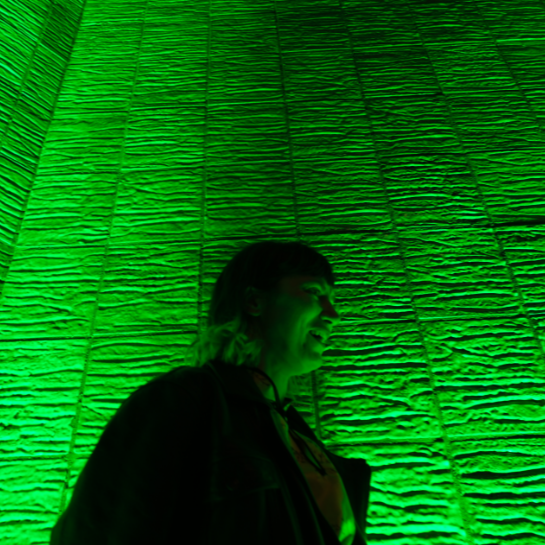
Sonia de Jager
Erasmus School of Philosophy
Panelist
Sonia de Jager is Postdoctoral Researcher at ESPhil (Erasmus School of Philosophy). S. de Jager works on the topics of (philosophies of) information, computation, and cognition through a variety of lenses: formal and abstract, embedded and political, fictional and speculative, among others. In 2025, S. de Jager completed a dissertation on Natural Language Processing as one of the main subjects of analysis (PhD project has taken the form of a “living book” and can be found at: www.n-o.ooo).

Johannes Schleiss
SURF and Npuls
Panelist
Johannes Schleiss is a Program Manager for AI and Data for Education at SURF in the Netherlands. He focuses on developing insight and strategy on the future of education with AI and data within the digital transformation program Npuls and works on the international activities on AI of SURF. Prior to joining SURF, Johannes earned a Ph.D. in AI and education, specializing in educational concepts for AI and worked on digital transformation of higher education in Germany.